Support your child's development through a variety of science, technology, engineering, and mathematics (STEM) exercises.
Flour, salt, cream of tartar, vegetable oil, water, food coloring
I’m not going to pretend to know the exact recipe—try googling “Play-Doh recipe” and make it with your little one. Adding food coloring gives instant scientific gratification, and they get to play with their creation! This baking activity is a win-win.
Rice, vinegar, food coloring, Ziploc bag
Make colored rice by adding a few drops of food coloring and a dash of white vinegar to a bag of rice. Have your child shake the bag until the color is thoroughly mixed. Spread the rice on a baking sheet to dry overnight, then use it for sensory play in containers.
Flowers, three sorting jars, masking tape, marker, tray
If you have flowers that are past their prime, use them for learning! Label jars “leaf,” “stem,” and “petal.” Ask your toddler to name each part, then model how to separate and sort them into the correct jar.
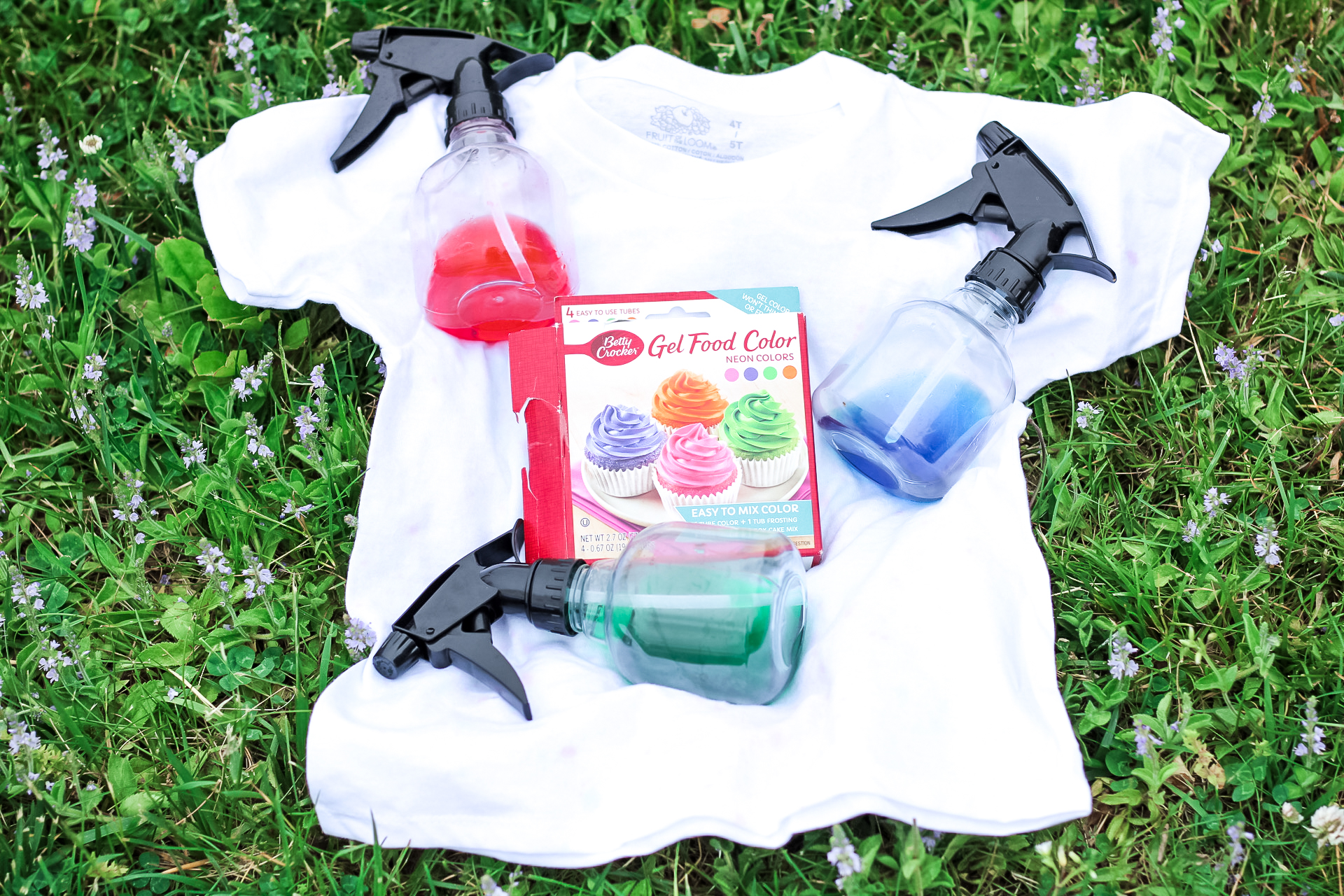
White shirts, squirt bottles, food coloring, water
Mix water and food coloring in squirt bottles until you get a good color. Have your toddler squirt the mixture onto a shirt to create their own tie-dye design. This is best done outdoors—little hands get excited!
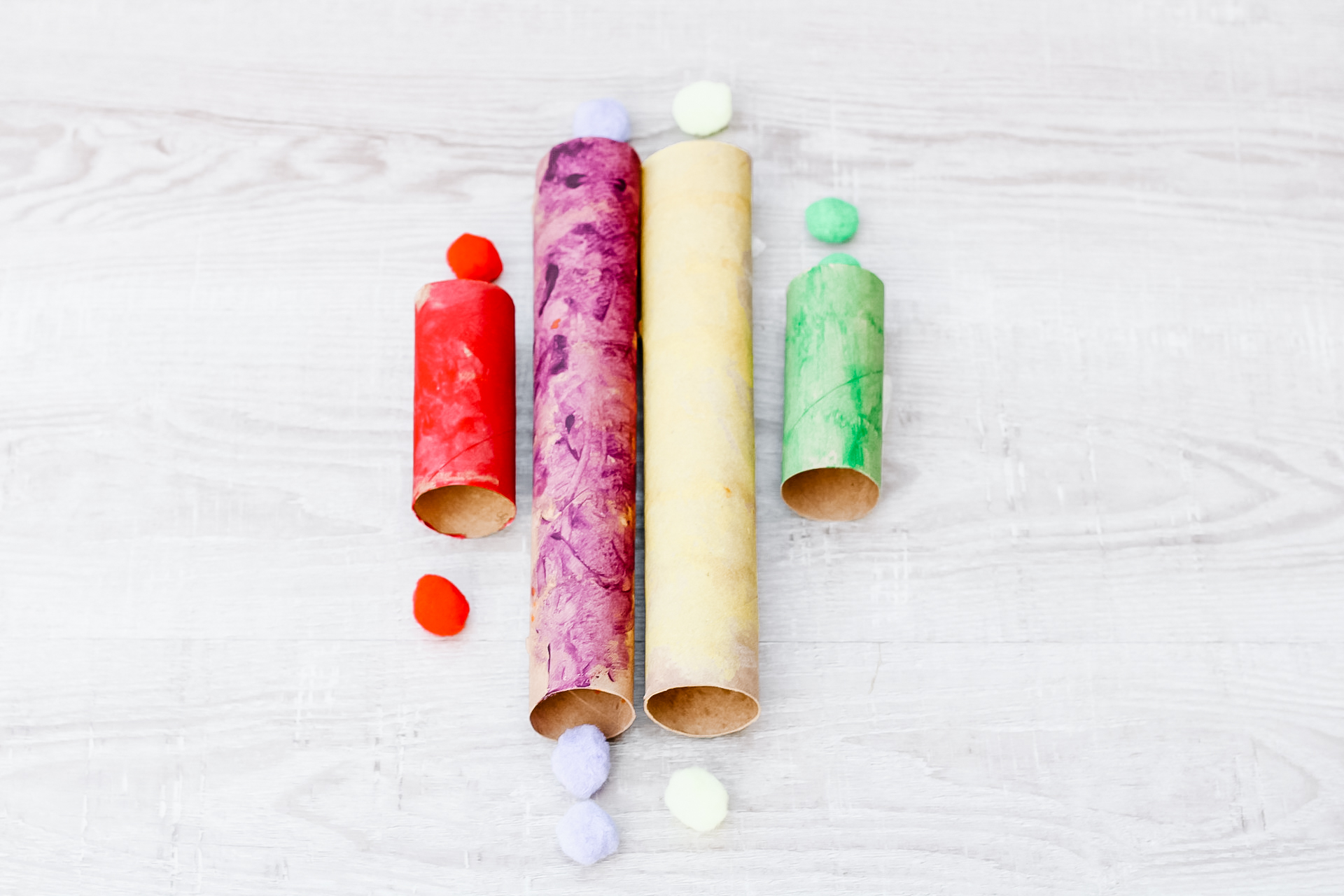
Toilet paper and paper towel rolls, paint, tape, pom-poms
This two-part activity starts by having your toddler paint each roll a different color. Once dry, tape the tubes to a wall and drop matching pom-poms through—watch them disappear and reappear at the bottom!
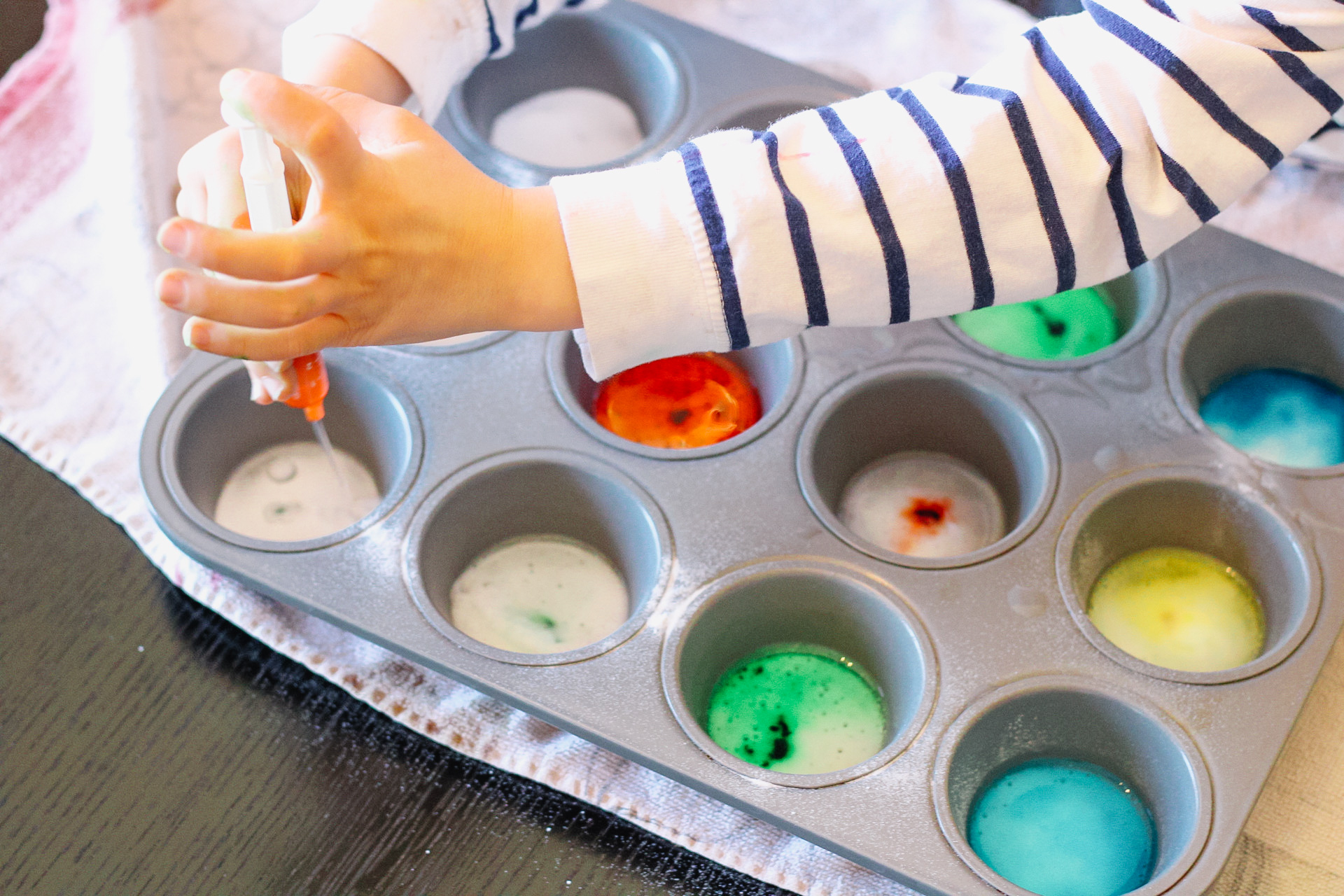
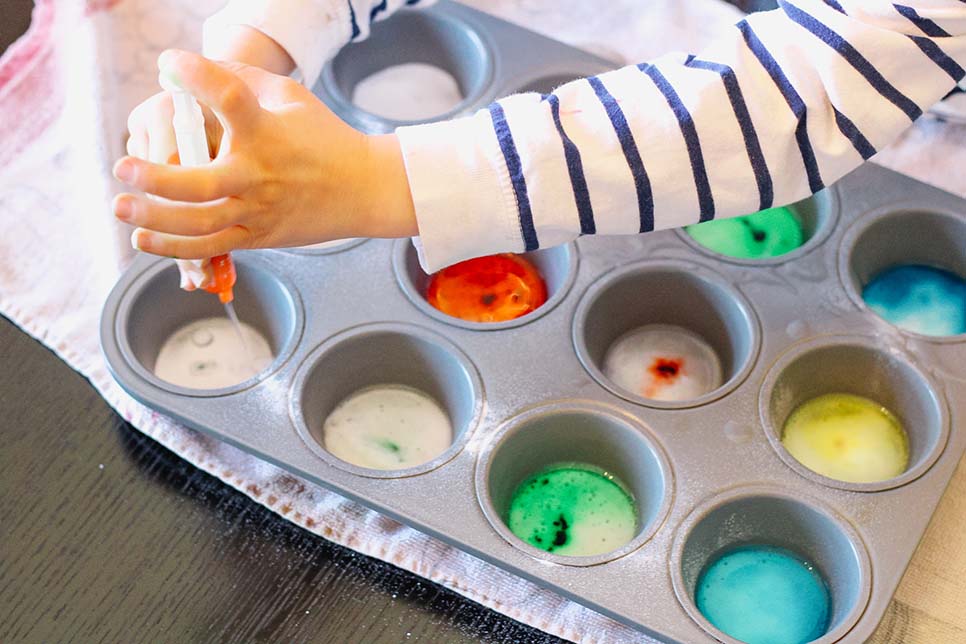
Baking soda, vinegar, dish soap, food coloring, muffin tin, medicine dropper, bowl
Add a spoonful of baking soda, a drop of food coloring, and a squirt of dish soap into each muffin cup. Put vinegar in a bowl, then let your toddler use the dropper to add it and watch the “eruption.” Tip: Ask them to mix vinegar with different colors and notice new hues. You can also teach patterns using colors!
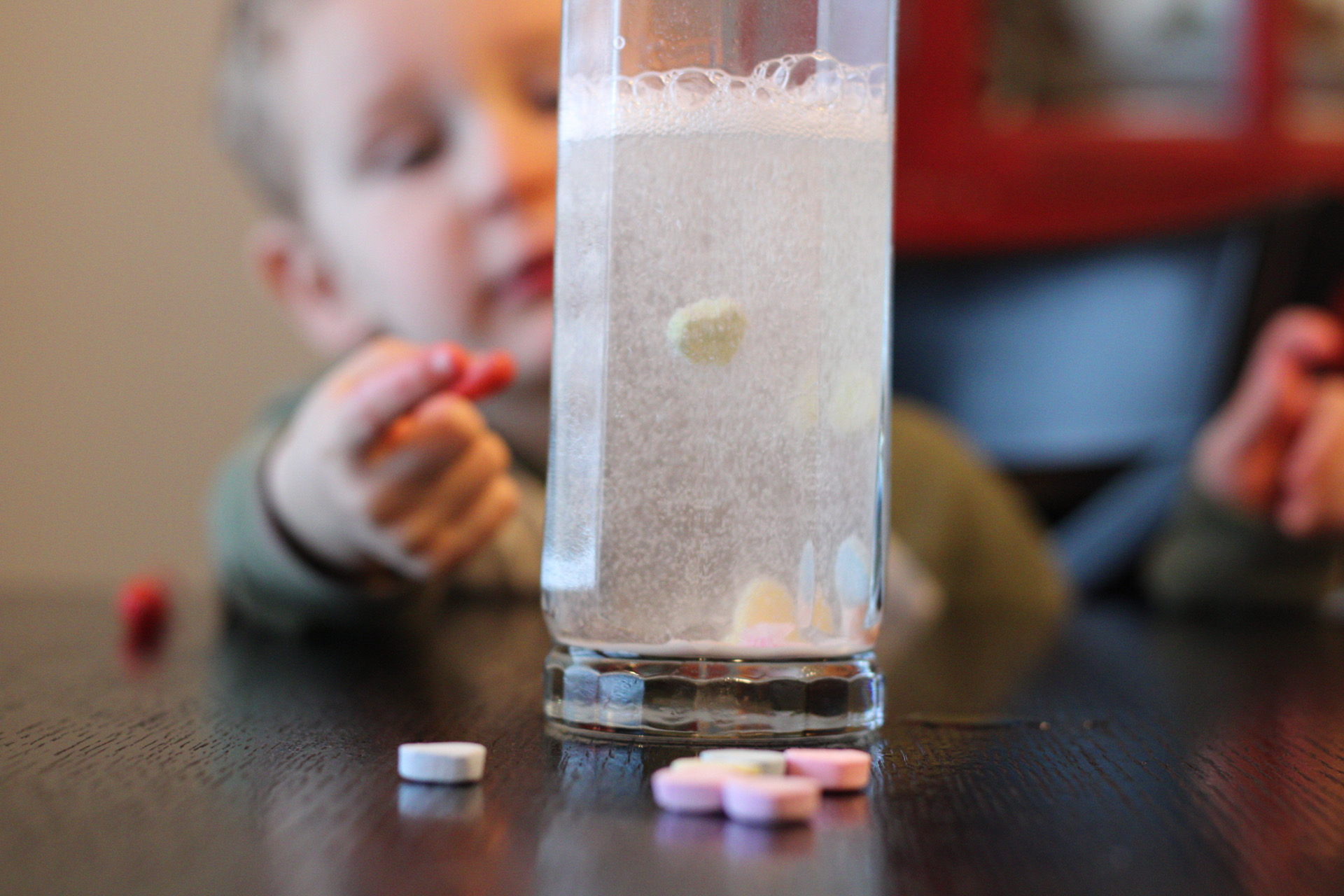
Glass, water, vinegar, baking soda, candy hearts
This is similar to the volcano but with a Valentine’s Day twist! Fill half a glass with water and stir in a spoonful of baking soda. Have your toddler drop candy hearts into the mix, then add a little vinegar—just enough so you don’t make a mess. Watch the hearts sink and then float up and down!
White crayon, watercolor paint, brush, white paper
Write ABCs with the white crayon (it’s hard to see at first). Then have your toddler paint over them—letters appear like magic! Tip: Press hard to make the letters bold so they stand out more.
Flower anatomy handout
Use the handout to point out each part of a flower—real or fake. Let your child gently pull petals or slice the stem (with supervision) to explore how it’s built.
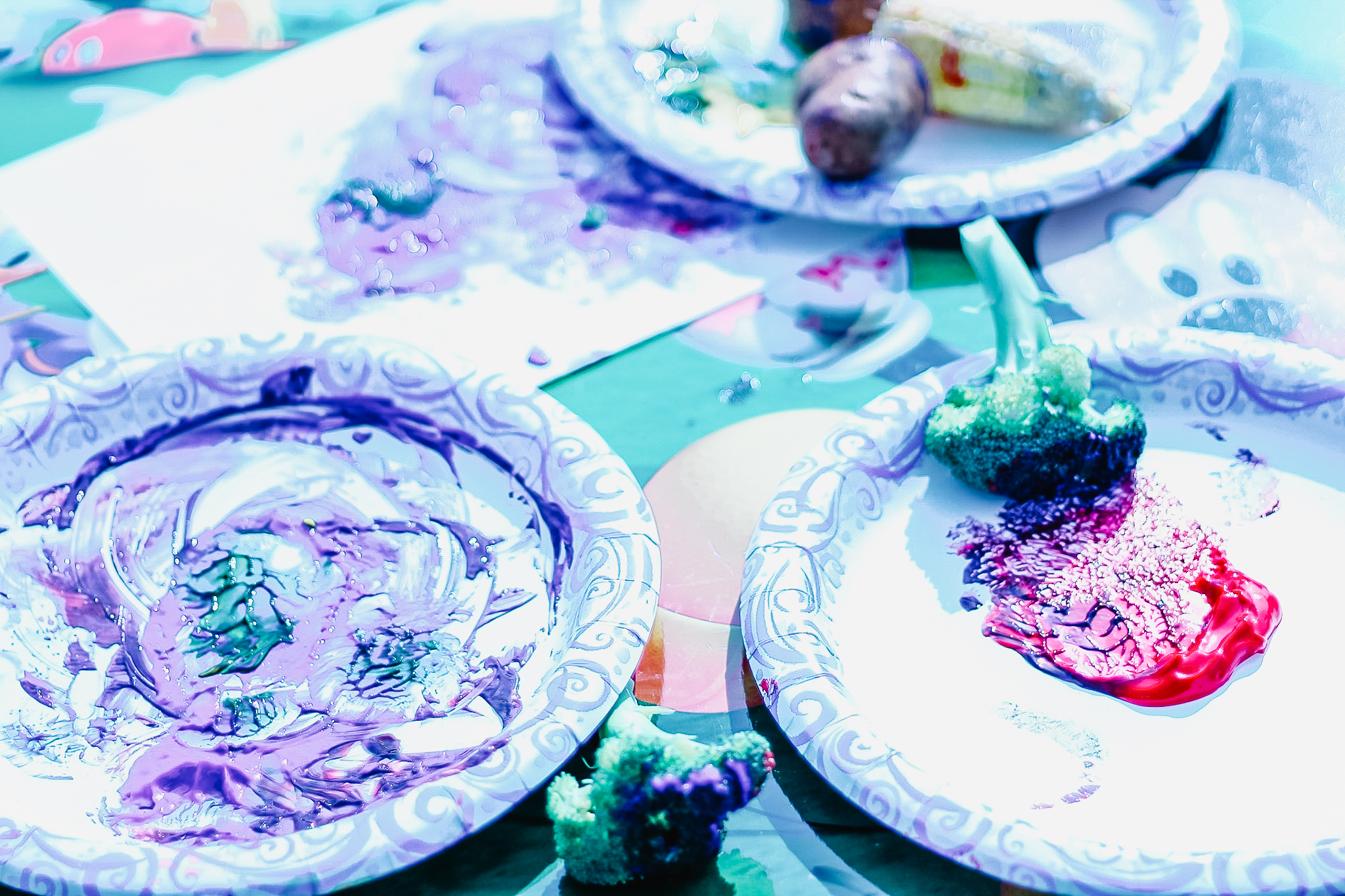
Vegetables, paint, paper, damp towel (to wipe messy hands)
Grab veggies you won’t eat—broccoli, halved potatoes, corn—and dip them in paint to stamp patterns on paper. This shows how everyday items can become art tools!
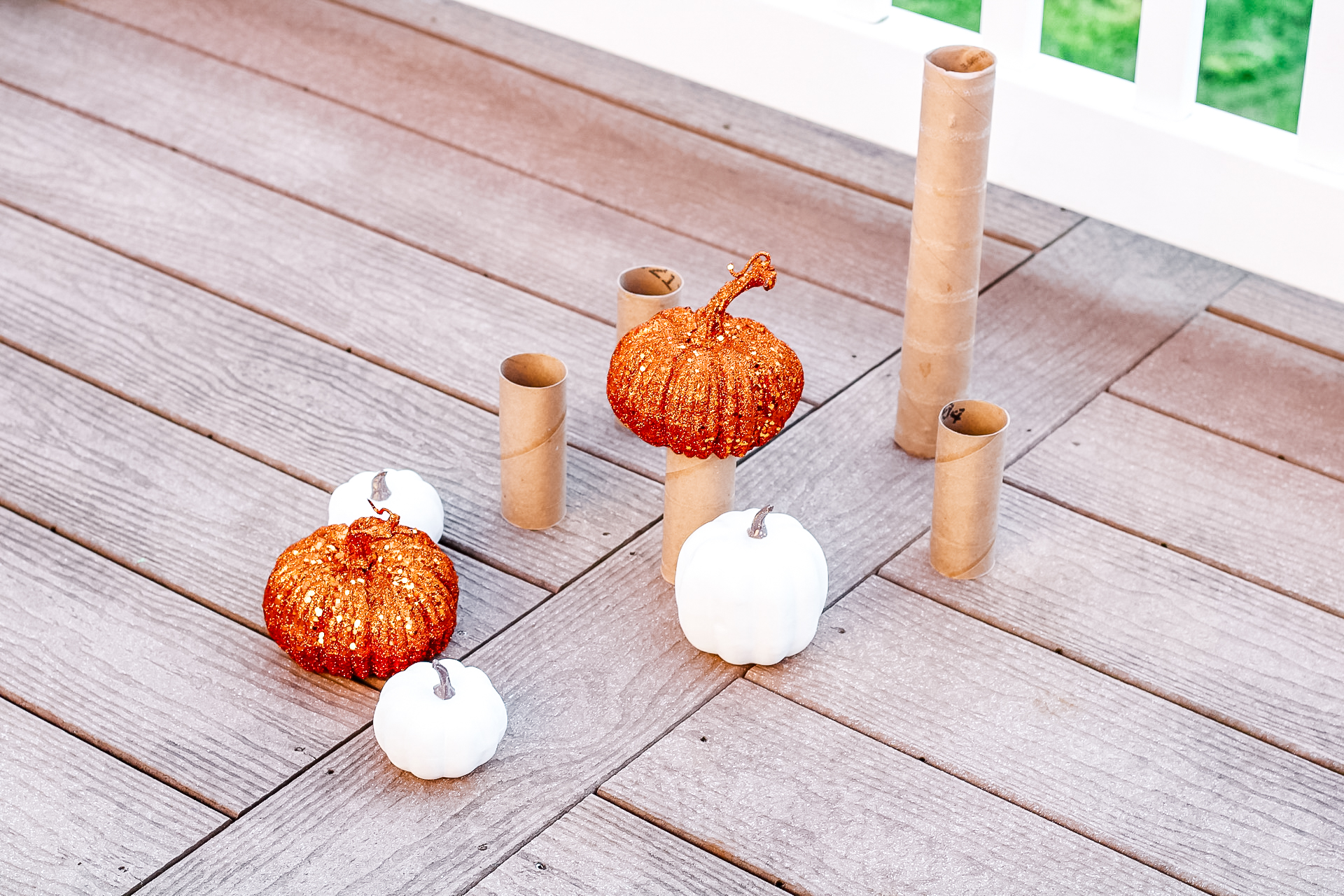
Toilet paper and paper towel rolls, small pumpkins or pumpkin decor
Stack rolls and balance pumpkins on top. It’s simple to set up but surprisingly tricky for little hands! Model first, then let your toddler try.