Expand your child’s vocabulary through sensory exploration and singing activities.
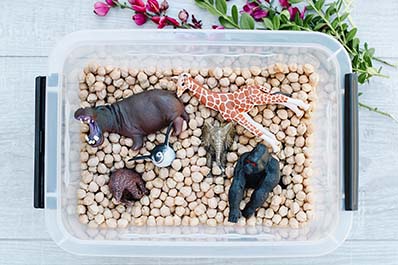
Animal figurines, sensory material (such as corn, beans, or cereal), and a container.
Hide the animal figurines in a container filled with sensory material ahead of time. Introduce your toddler to the container, building excitement about what might be inside. Ask them to dig through the material with their hands to find the animals. You may need to model this activity first. Once they pull out an animal, ask them to name it or tell you the sound that animal makes.
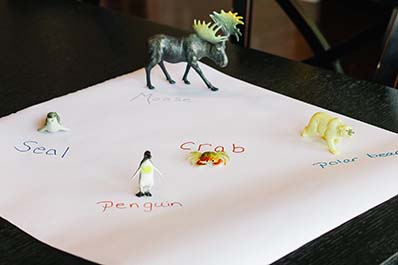
Paper, a writing utensil, and animal figurines.
Choose five of your child’s favorite animal figurines and write their names on paper. Place the animals in a pile and ask, “Which word says ‘moose’?” Then ask, “What letter does ‘moose’ start with?” When your child responds, discuss the sound of the letter M and ask which words start with M. This simple exercise expands communication skills.
None.
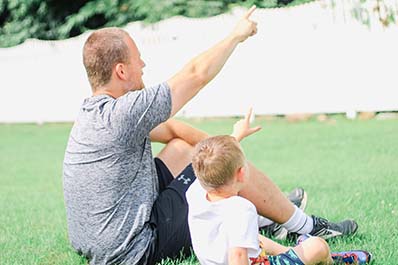
Similar to the “I Spy” game, begin by saying “I see a ____” (name an object in the room) and ask if your toddler sees it too. Then ask them to point to it or fetch it for you!
A book.
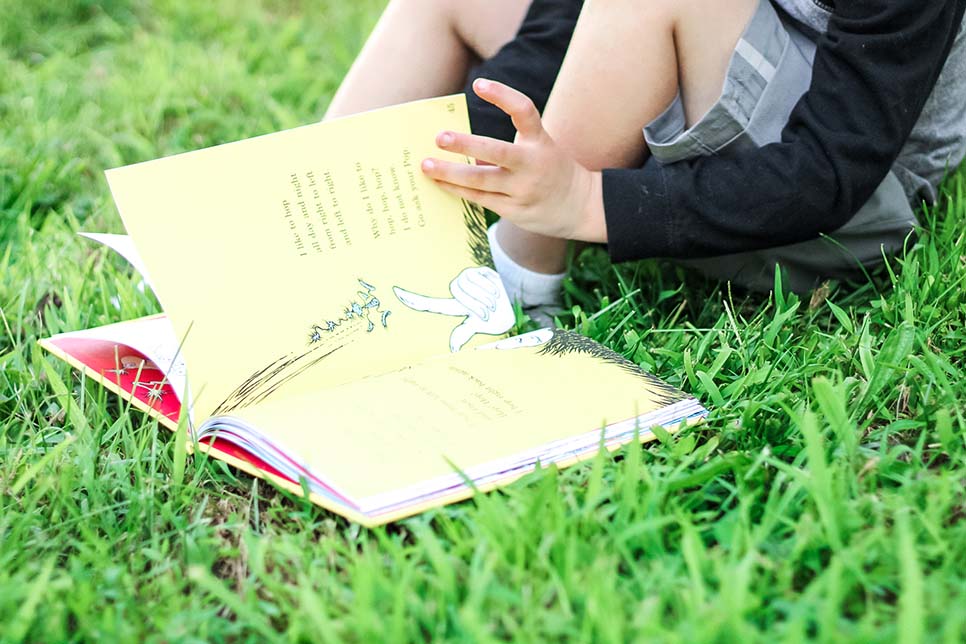
Instead of reading to your child, ask questions about what they see on each page to promote dialogue and expand vocabulary. Build their confidence by asking about familiar elements—such as the animal type, its sound, colors, and action words. As their skills develop, ask open-ended questions (e.g., “Why is Goofy sad?” or “Where did the frog go?”).
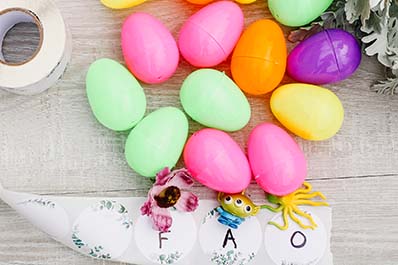
Easter eggs, blank stickers, a writing utensil, and small trinkets (one for each letter of the alphabet) that fit inside an egg.
Fill each Easter egg with a trinket that begins with a specific letter. Write that letter on a sticker and place it on the egg. Have your child say the letter, its phonics sound, and the item’s name. Once they master this, hide the eggs around the house or yard for added fun!
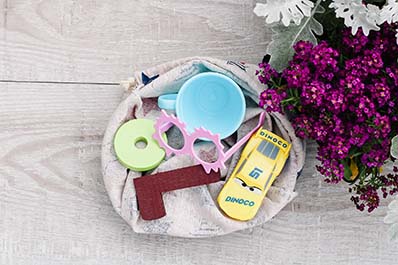
A small bag and household items such as a fork, spoon, plate, bowl, and cup.
Place items in the bag ahead of time. Ask your toddler to find the spoon by feeling inside. If they pull out something else, ask them to name it and set it aside. When they find the correct item, congratulate them and continue practicing naming each object.
A familiar song your toddler already knows.
Sing a song you both know, pausing at certain words. This gives your toddler the chance to “fill in the blanks” and demonstrate how well they know the lyrics.
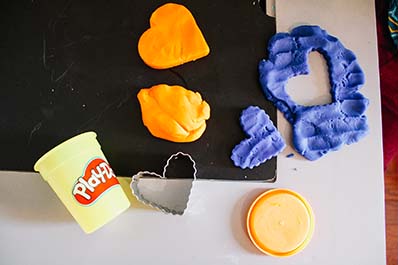
Play-Doh and plastic cookie cutters.
Show your child how to make pretend cookies using Play-Doh, narrating each action. First, model how to “open” the container, saying “out” as you remove it. Next, “flatten” the Play-Doh and press with cookie cutters, modeling each shape’s name. As you press, say “push.”
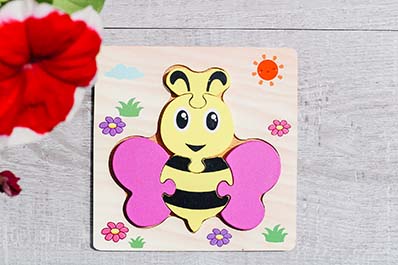
A puzzle.
Puzzles offer both problem-solving and communication practice. “Dissect” each piece to teach new vocabulary. For example, with a bumblebee puzzle, point out the eyes, wings, and belly. You can also discuss colors and count different parts.
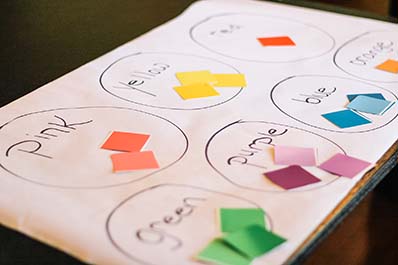
Construction paper in various colors (or free paint swatches), a large sheet of white paper, a marker, and scissors.
Gather paint swatches and cut them in half. Label a large sheet of white paper with color names, then place swatches in a pile. Ask, “What letter does ‘pink’ start with?” If your child struggles, model the “pah” sound for P and remind them the word is “pink.” Ask them to find the pink swatches. Repeat regularly to build reading skills.
Flashcards, three pieces of paper labeled 1, 2, and 3, and a writing utensil.
Select flashcards with words up to three syllables. Show a card and say the word slowly, tapping each syllable. Have your child tap the corresponding number. Guide their hand as needed until they grasp the concept.
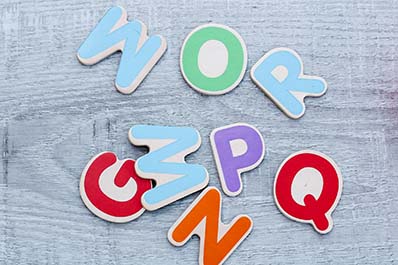
Alphabet puzzle pieces or magnets.
Ask your toddler to say the letter’s name, then ask what sound it makes, and finally ask which word starts with that letter. You may need to coach them through each step or focus on the first two steps until they’re ready for all three.